Every Drawing has a Story…
NEW Drawings drop on Friday
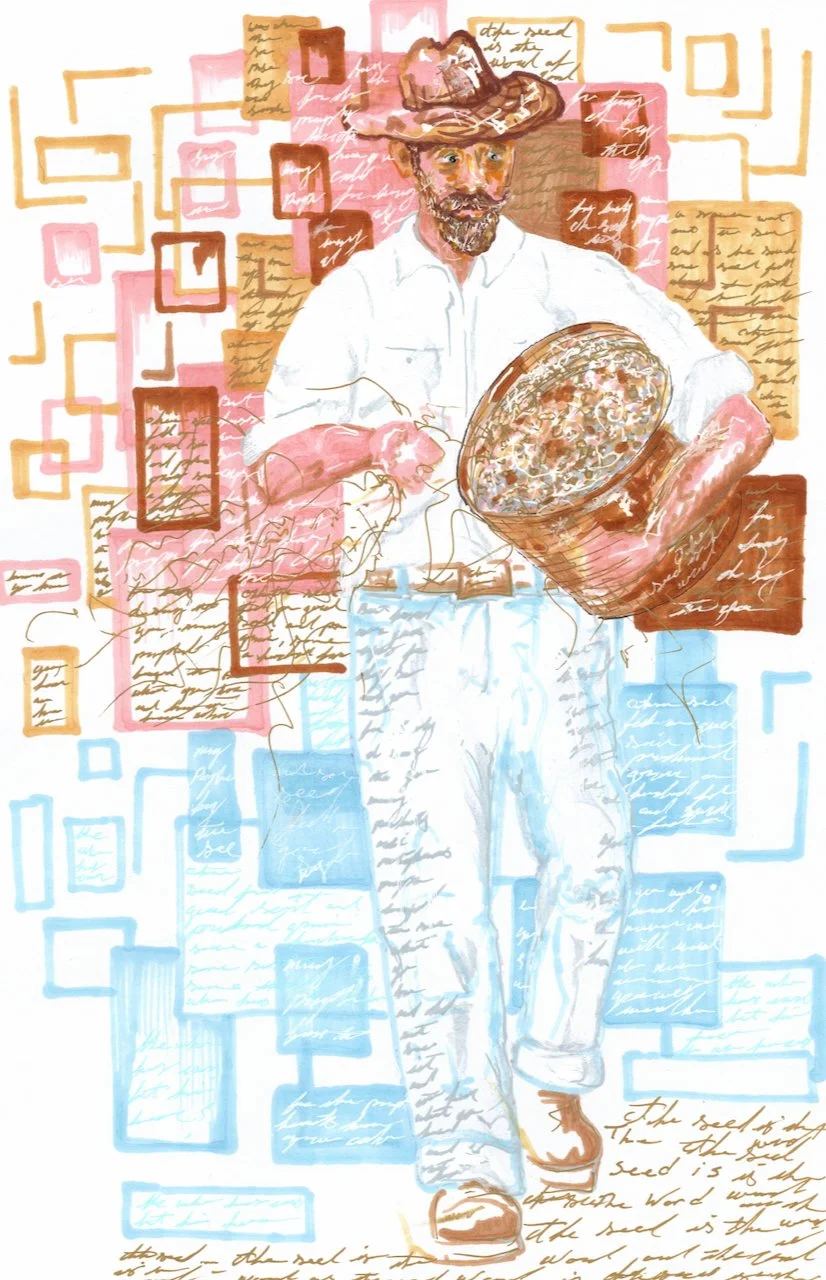
A bearer of precious seed went out to plant.
He scattered it freely and generously, paying little attention to the condition of the soil. Some seed fell on hard places. Some landed on dry, moisture-starved ground. Some fell among weeds and thorns. And some settled into deep, rich, fertile soil.
Every seed carried extraordinary promise. Each one was capable of producing an incredible harvest. It could even be said that no finer seed has ever been scattered.
As time passed, the seeds that fell into good soil produced remarkable crops. The rest, even if they sprouted for a moment, withered under harsh conditions.
All except one.
One seed slipped into a narrow crack in the ground and disappeared from sight. Hidden away, it lay dormant for a time. Then the spring rains came. Water found its way into the crack, softening the soil around the seed and awakening the life within. Slowly, roots pushed downward until they reached the richer soil below.
What began quietly eventually grew strong.
In time, that single seed yielded a hundredfold, producing the very seed the bearer would scatter again the next season.
I wrote this after reading Matthew 13:1–43 in the Gospel of Matthew, where Jesus shares several Parables of Sowing.
At first glance, the lesson seems simple: be good soil. But the longer I sat with the parable, the more I realized that most of us have spent time in difficult ground. There are seasons when our hearts feel hard, dry, or crowded by the worries of this world.
Perhaps that is why the sower scatters his seed so generously.
He knows that sometimes we find ourselves in barren places.
And sometimes
we are hidden in the cracks.
Yet the seed is still alive,
still filled with promise.
His rain has a way of finding us.
Matchbox Adventure…
NEW Drawings drop on Friday
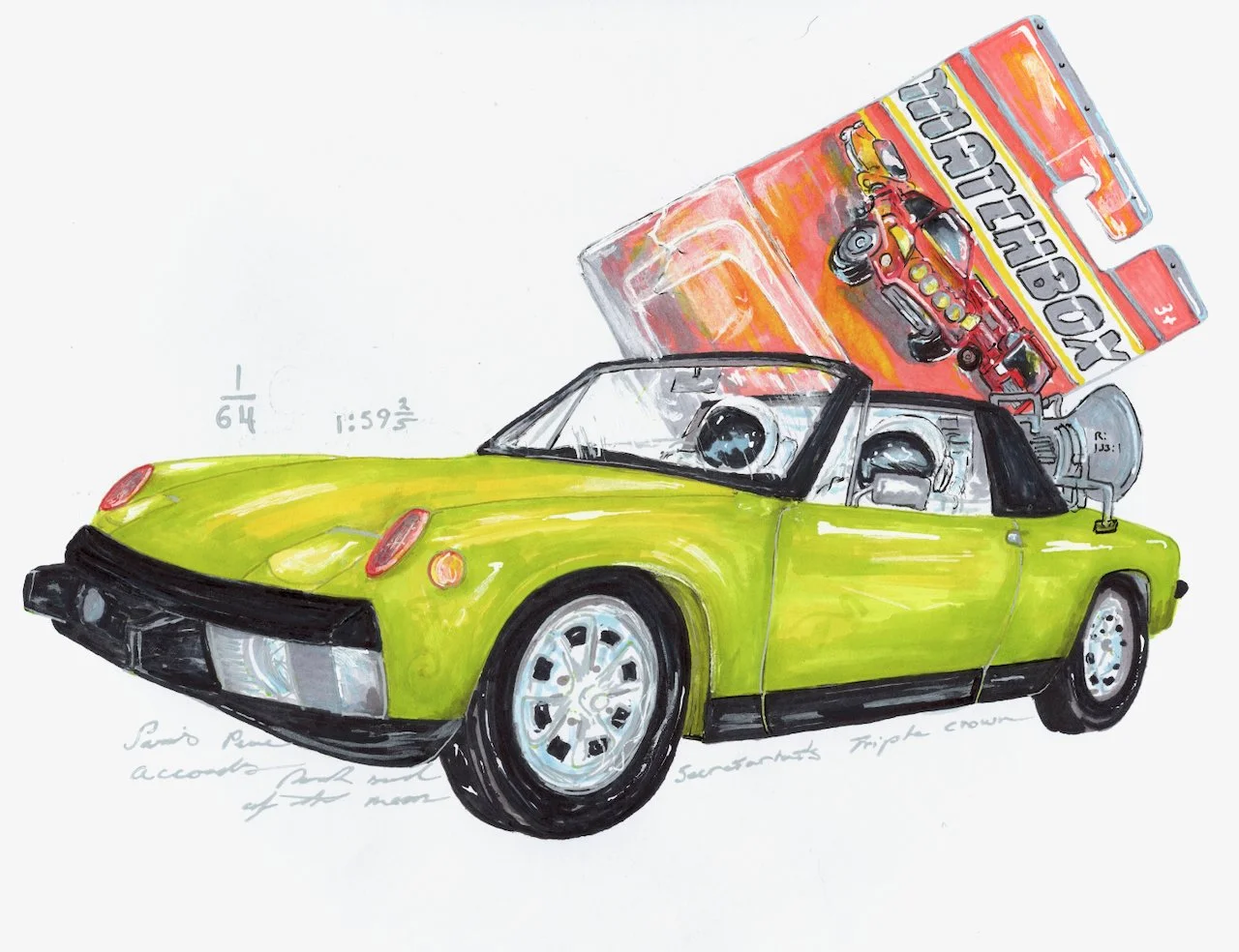
Jack Odell created a tiny road roller in 1952 for his daughter Anne, small enough to fit inside a matchbox. When her classmates saw it, they all wanted one. That simple moment sparked an idea, and Lesney Products soon launched the Matchbox line of miniature vehicles.
A young Patrick discovered Matchbox cars in the late 1970s and spent countless hours racing them through obstacle courses, loops, and yards of bright orange track. In my imagination, I was never just watching the cars. I was driving them. Every launch down the track felt like the start of a real adventure.
Fast forward to 2026, and Matchbox is still going strong, producing 100 million toy cars each year. Yet when I see them today on the shelf at the grocery store, something has changed. I no longer imagine myself behind the wheel.
Somewhere between childhood and adulthood, imagination often gets packed away. Creativity gets traded for schedules, responsibilities, and the practical demands of life. The sense of wonder that once came so naturally can slowly fade into the background.
This week, I decided to unlock that childlike imagination again and sketch a Matchbox-style adventure.
As I was drawing, I was reminded of a verse that points us back to something simple but profound: childlike faith.
Children trust easily. They imagine freely. They believe without overthinking. Jesus tells us that this posture of humility and trust is exactly what the kingdom of heaven requires.
Challenge: Pause for a moment today and remember what it felt like to imagine and believe like a child.
“At that time the disciples came to Jesus, saying, ‘Who is the greatest in the kingdom of heaven?’ And calling to him a child, he put him in the midst of them and said, ‘Truly, I say to you, unless you turn and become like children, you will never enter the kingdom of heaven. Whoever humbles himself like this child is the greatest in the kingdom of heaven.’” Matthew 18: 1-4 (ESV)
Space & Time
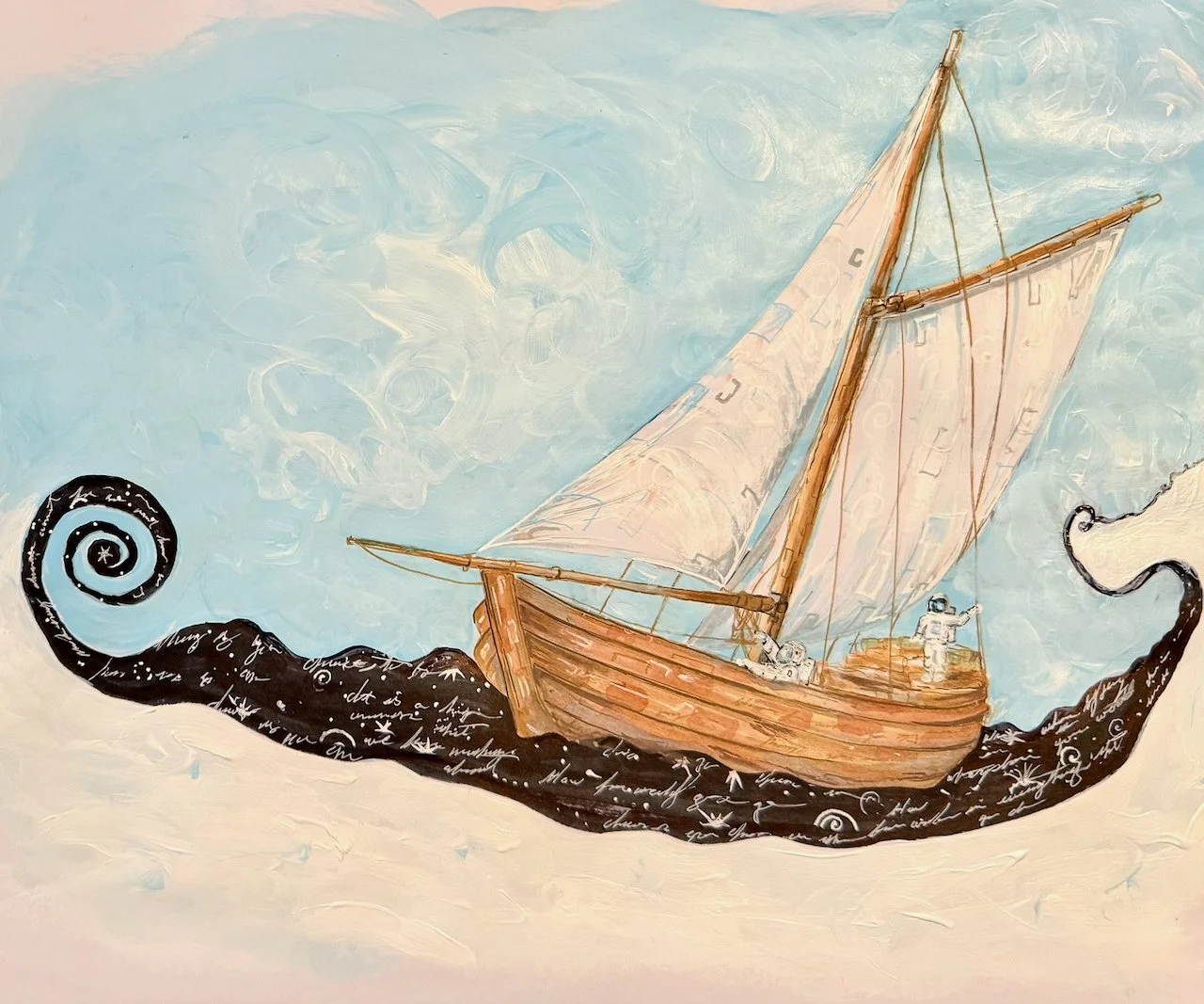
Newton: Objects curve because a force pulls them.
Einstein: Objects follow straight paths within a curved spacetime.
Both descriptions work, but Einstein’s is deeper and more accurate, especially at large scales, such as planets following curved orbits, light bending near stars, spacecraft trajectories deviating, and clocks in orbit running faster than clocks on Earth.
Like a ship sailing along the fabric of spacetime, the voyage would always feel straight in the moment. Yet over great distances, its course would slowly curve, not because it is being steered, but because it is following the natural geometry of spacetime shaped by nearby mass and energy.
Pause for a moment and consider: God exists outside of space and time. He sees the entire voyage laid out before Him, every horizon, every current, every bend and turn you will experience along this journey of life. His power is so great that, regardless of the direction in which we begin, He continually draws us back toward Himself. He has revealed Himself in the very fabric of space and time, displaying order, purpose, and masterful design.
“Your eyes saw my unformed substance; in your book were written, every one of them, the days that were formed for me, when as yet there was none of them.”
Psalm 139:16 ESV
Pneuma
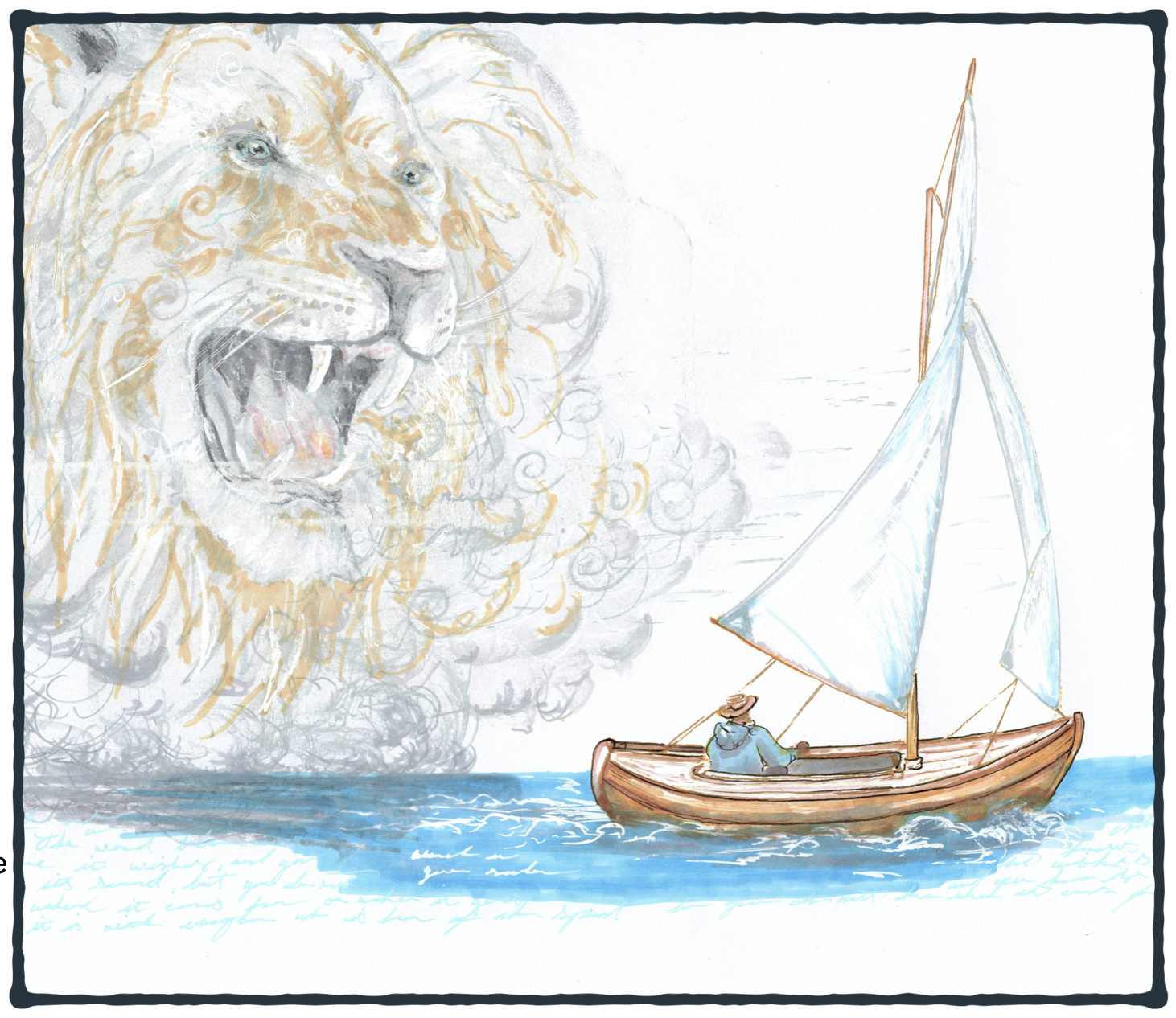
The Greek word “pneuma” can mean wind, breath, or spirit.
Jesus poetically explains,
“The wind blows where it wishes, and you hear its sound, but you do not know where it comes from or where it goes. So it is with everyone who is born of the Spirit.”
— John 3:8 (ESV)
Wind can only be observed by the things it interacts with: rustling leaves in a tree, blowing sand on a beach, or a sailboat skipping across the bay. Harnessing the wind is less about brute force and more about alignment. If you want to move forward, the direction of your sail often matters more than the strength of the wind.
This holds true in our walk with God. We cannot see the wind of His Spirit that breathes upon us, yet with proper alignment we are carried forward. Just as a sailor trusts the wind and weather he cannot command, I strive to trust the Spirit of God to guide me through all that this life brings. And when I get off course, I make corrections and tack back into His breeze.
Seeds for Thought from a Tractor Seat
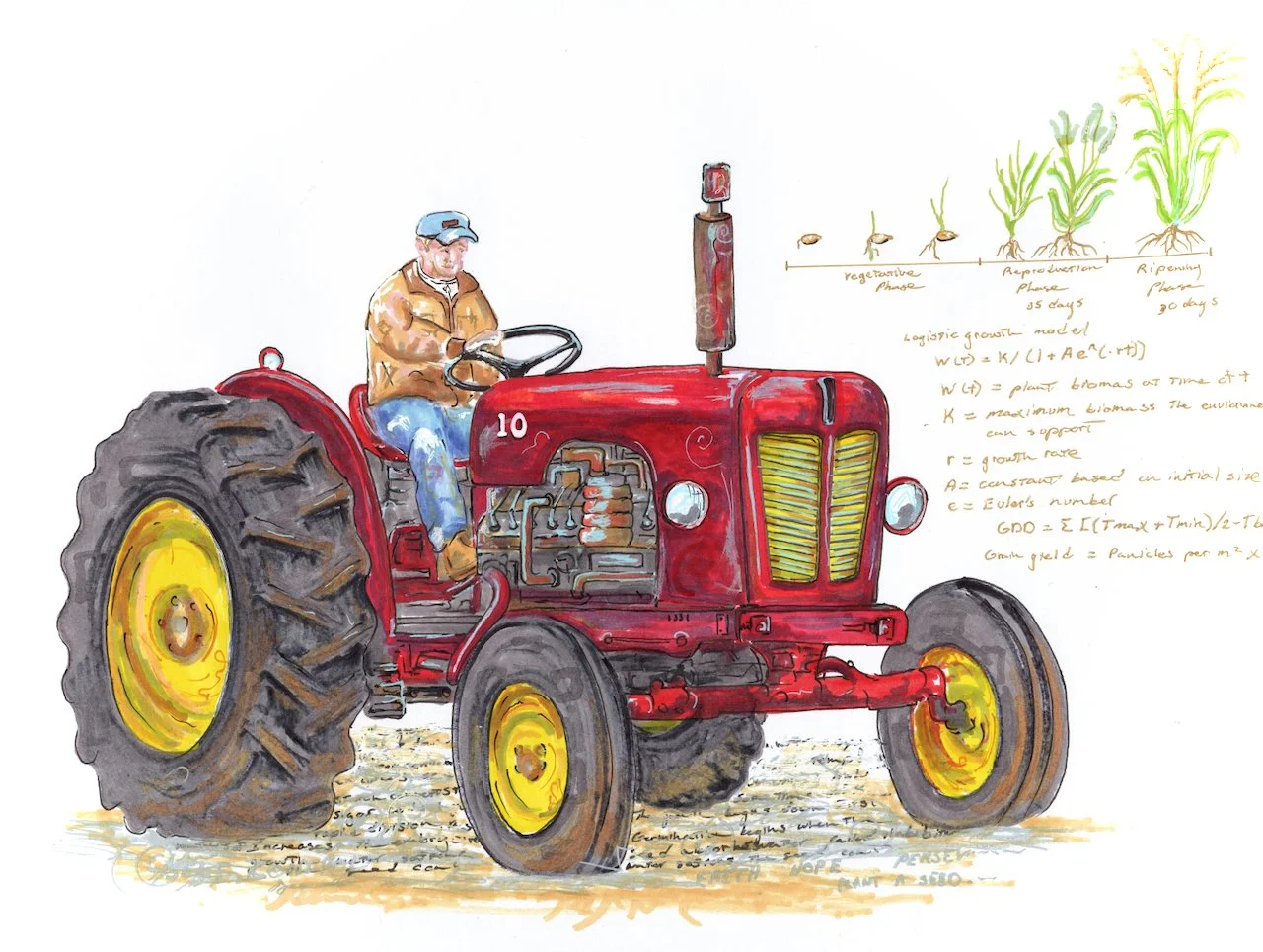
Germination begins quietly, unseen beneath the soil. A seed takes in water. The dry husk softens, and what once looked lifeless awakens. Inside, enzymes stir and begin their work, turning stored starch into sugar and setting metabolism back into motion. A hidden treasure hums to life.
Science can trace each step. It can chart the chemistry, map the DNA, and measure the heat units needed to bring a crop to maturity. It can explain dormancy in terms of hormones and environmental cues, and describe how certain seeds can rest for decades, even centuries, waiting for the right conditions.
But sitting here, I am aware that description is not the same as meaning.
Science tells me how the seed wakes. It does not tell me why life stirs at all. It can model hypotheses about how life may have begun, sketch pathways from chemistry to biology, and simulate ancient oceans under lightning-lit skies. Yet the deeper question lingers: why is there life instead of dust alone?
Through observation, science systematically describes how the universe behaves. It measures rainfall and sunlight, predicts yield, and calculates growth curves. But it does not weigh purpose. Meaning is not something you can load into an equation.
And maybe that is fitting.
Because true meaning, like the life tucked inside a seed, is not something we manufacture. It is a gift received, awakening awe and wonder deep within the soul. It is the realization that life is not a series of fortunate accidents, but intentional design.
“And he said, “The kingdom of God is as if a man should scatter seed on the ground. He sleeps and rises night and day, and the seed sprouts and grows; he knows not how. The earth produces by itself, first the blade, then the ear, then the full grain in the ear. But when the grain is ripe, at once he puts in the sickle, because the harvest has come.”
Mark 4:26-29 ESV
A Dream that Endures…
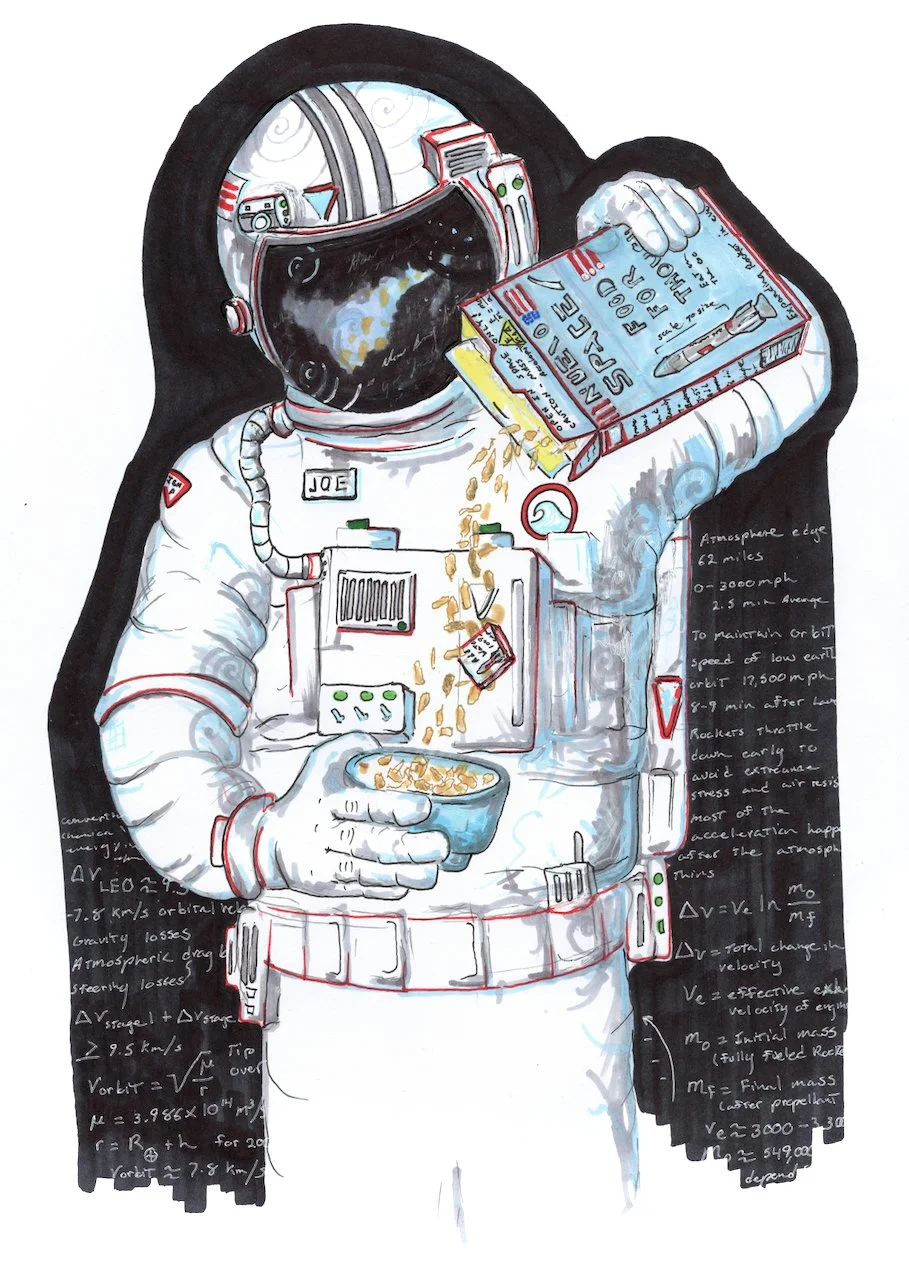
As a small child, my mind was easily swayed by the promise of a prize at the bottom of a cereal box. A plastic rocket could ignite my imagination, turning a simple toy into daydreams of becoming an astronaut.
As I sketched this drawing, I found myself thinking of a young Joseph. He too was a boy with a dream. But his dream would need to age, tested by time and hardship, for more than twenty years before it came to life. At seventeen, Joseph was sold into slavery by his jealous brothers. He rose to a place of trust in Potiphar’s house, only to be cast into prison for a crime he did not commit. Even there, God was at work, lifting him once again into a position of responsibility.
At thirty, Joseph was suddenly pulled from prison when Pharaoh’s cupbearer remembered the man who had once interpreted his dream. Brought before Pharaoh, Joseph trusted God for wisdom and explained pharaoh’s troubling dream. The seven fat cows and seven thin cows foretold seven years of abundance followed by seven years of famine. Pharaoh, recognizing God’s hand upon him, placed Joseph in charge of preparing the nation for what was to come.
Fast forward 8 years with storehouses full, the famine had spread across the land, and the very brothers who had betrayed Joseph stood unknowingly before him, desperate for help. The full account is found in Genesis 37–50.
In the end, Joseph saw clearly that God had used every twist of his story to position him exactly where he needed to be, not only to save his family, but countless others as well. My takeaway is simple. A dream without direction fades as quickly as the prize at the bottom of a cereal box. But a dream from God, paired with faith, ambition, patience, and hope, will endure —and has the power to change everything.
A Little While…
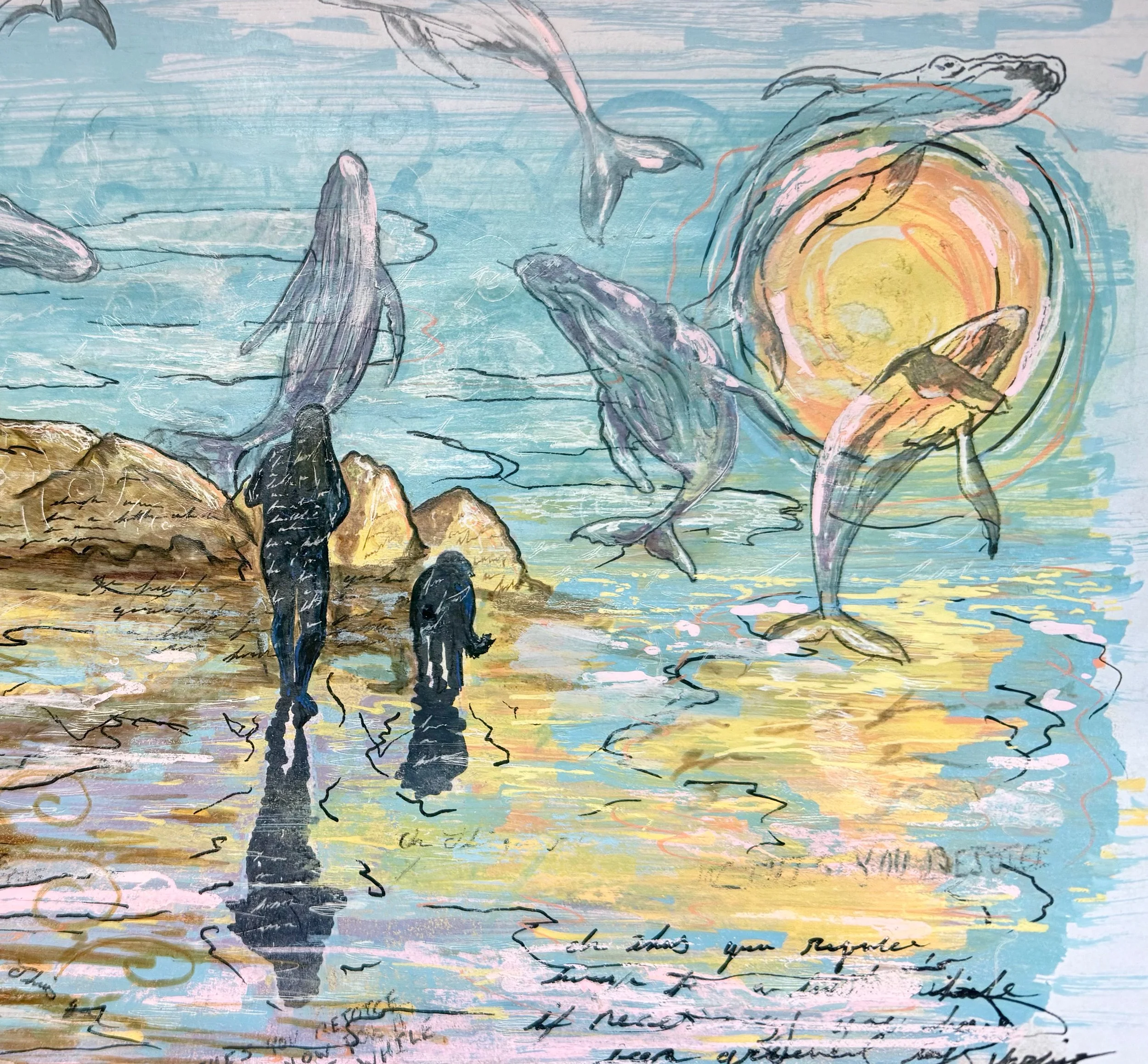
A typical winter day on the Oregon coast is cold and rain-soaked. This winter in the PNW has been anything but typical. That is how I found myself walking barefoot along the beach, trailing behind my wife and dog, carried off by the daydream of an unusually warm midwinter afternoon. In that quiet moment, it struck me that every day is a gift. Some simply arrive wrapped a little more beautifully than others.
Over the past few weeks, I have been spending time in the book of 1 Peter. I am drawn to the firsthand perspective and unfiltered honesty from which Peter writes. He speaks of heart-deep promises and hard-edged realities. He reminds us that life will hold both joy and suffering, peaks and valleys alike. Most of all, he presses home this truth: life is meant to be lived with purpose and intention, whether we stand on the mountaintop, walk through the valley, or find ourselves barefoot on the sand.
“In this you rejoice, though now for a little while, if necessary, you have been grieved by various trials, so that the tested genuineness of your faith—more precious than gold that perishes though it is tested by fire—may be found to result in praise and glory and honor at the revelation of Jesus Christ.”
1 Peter 1:6-7 ESV
Can Nothing Even Exist?
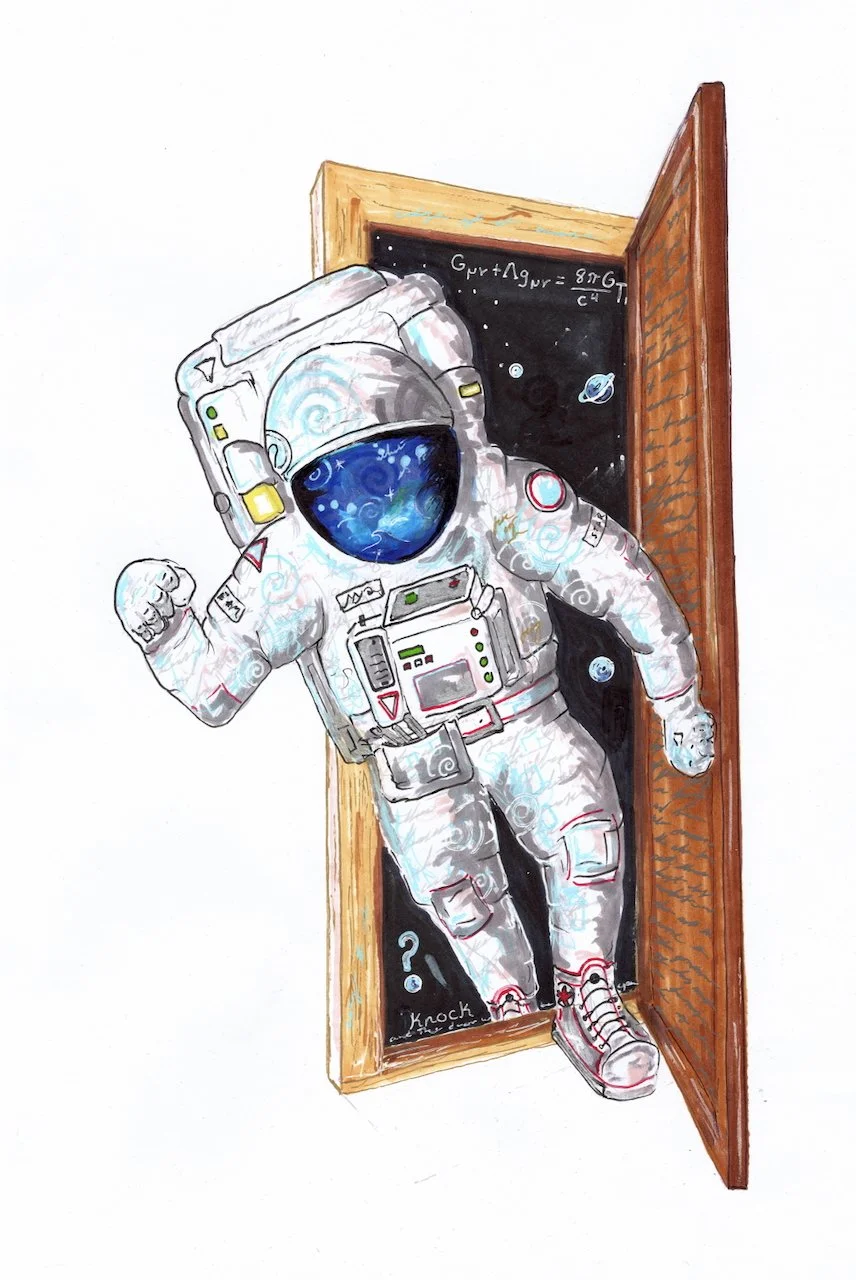
ZOOM OUT to the scale of the entire universe, galaxies, stars, planets, black holes, gas clouds, satellites, and debris, and the amount of matter that actually takes up space is astonishingly small. The universe is 99.9999999999999999999999999999% empty, sometimes containing as little as one atom per cubic meter. Empty… but not nothing.
It made me ask the question: Can “nothing” even exist?
If “nothing” means no space, no time, no energy, no laws, and no potential, then “nothing” could never produce anything. It couldn’t spark reactions, form stars, or even be, because “being” is itself a property. True “nothingness” is impossible.
Quantum physics shows that even the vacuum of space is something, full of energy, bending, rippling, and capable of hosting particles. And even if every atom disappeared, spacetime itself would remain. You can’t remove space without removing the entire universe.
All of this reminds me how limited our understanding truly is. Science reveals wonder through observation, but also points us to mysteries too deep for us to grasp. And those mysteries point to a God far beyond our understanding, One who not only shapes stars, but speaks the very fabric of creation into existence. He is the One whose heart drives the very pulse of the universe.
“He stretches out the north over the void
and hangs the earth on nothing.”
Job 26:7 (ESV)
“Behold, these are but the outskirts of his ways,
and how small a whisper do we hear of him!
But the thunder of his power who can understand?”
Job 26:14 (ESV)
What is tied to your bumper?
The image of an elephant in the room has long been used to describe something obvious that people deliberately ignore. Versions of this idea appear as early as an 1814 Russian fable penned by Ivan Krylov, and later writers, including Mark Twain, used similar imagery to expose willful blindness. Over time, “the elephant in the room” became a common phrase, now woven into everyday conversation, publications, and even sermon titles.
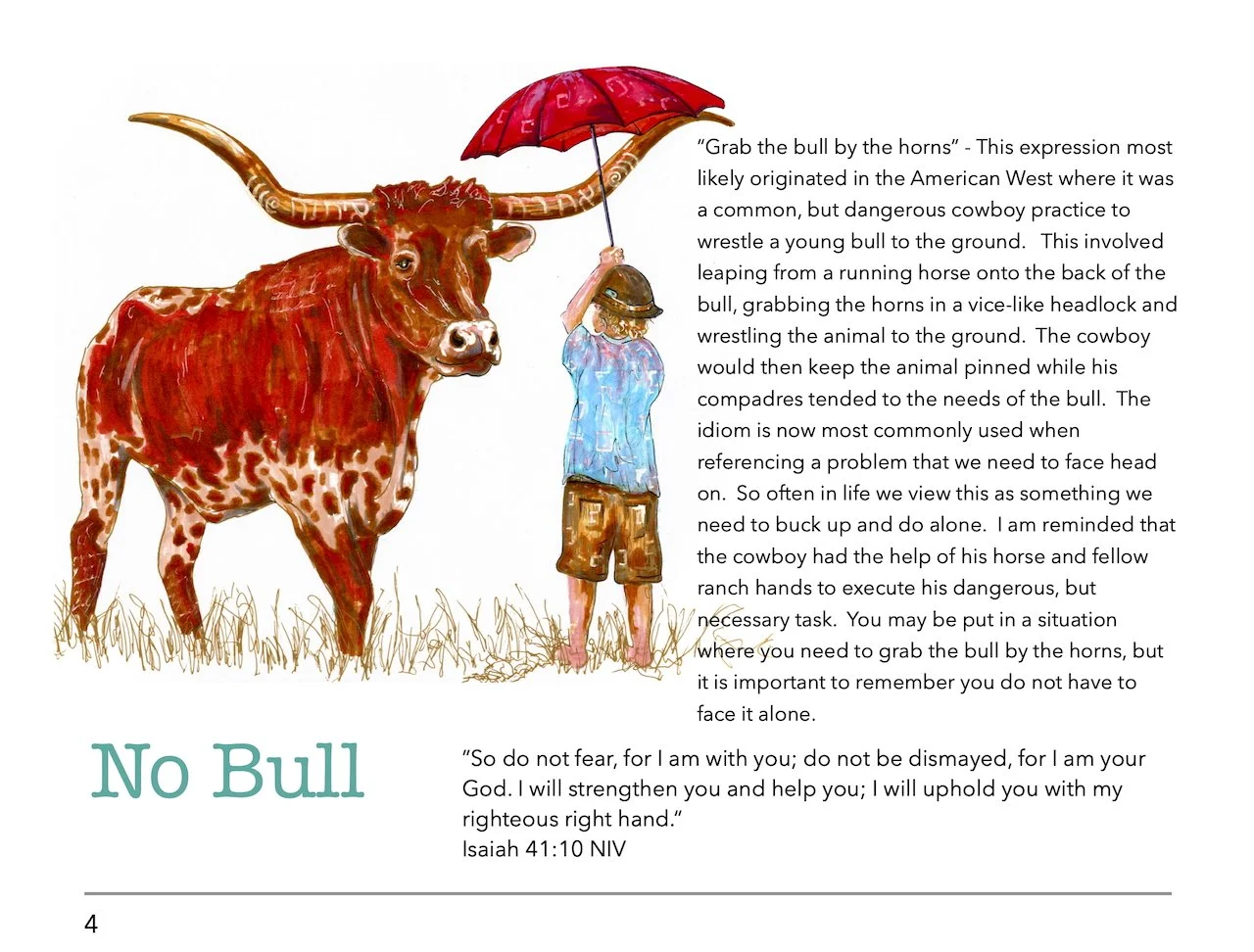
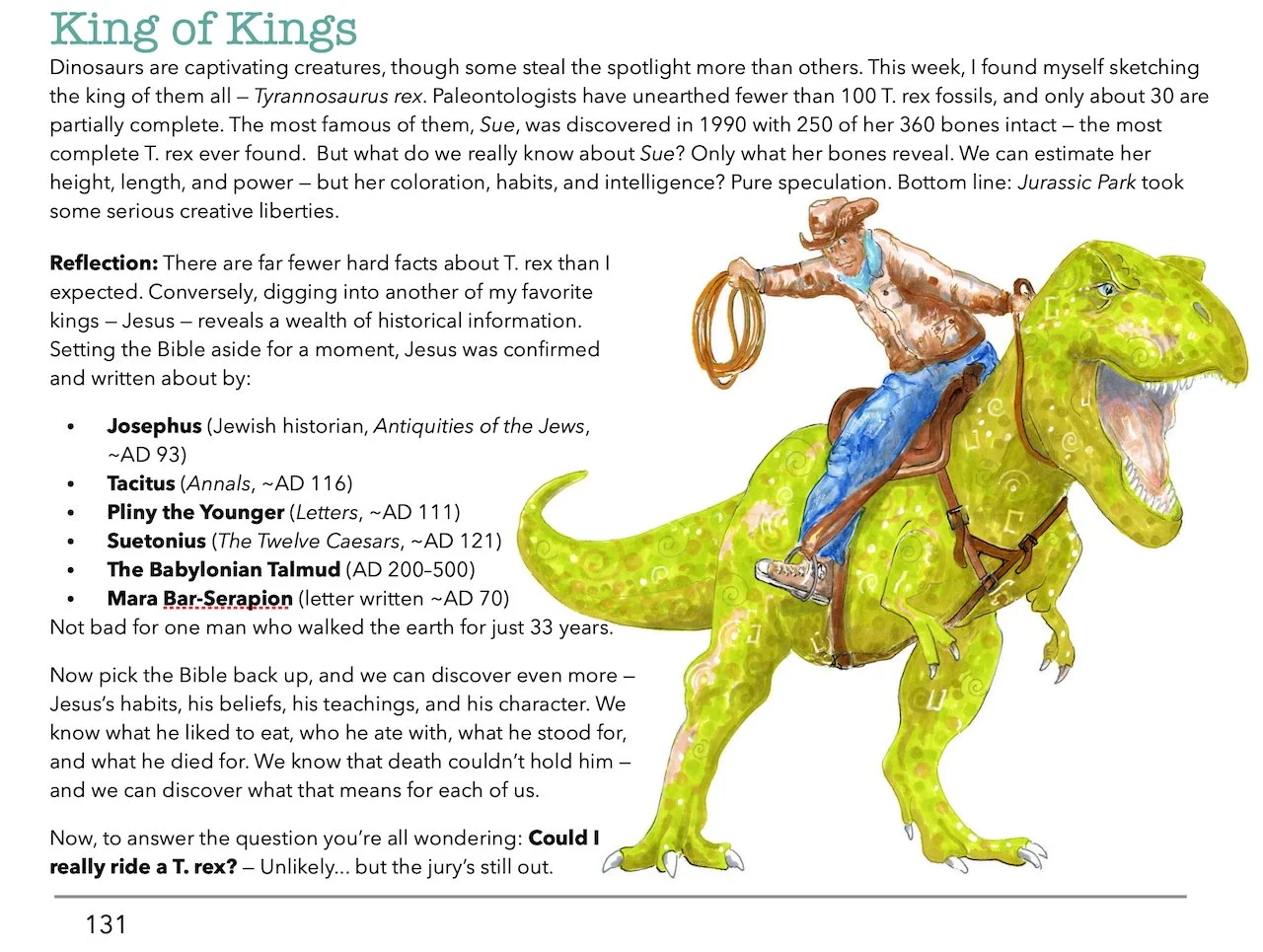
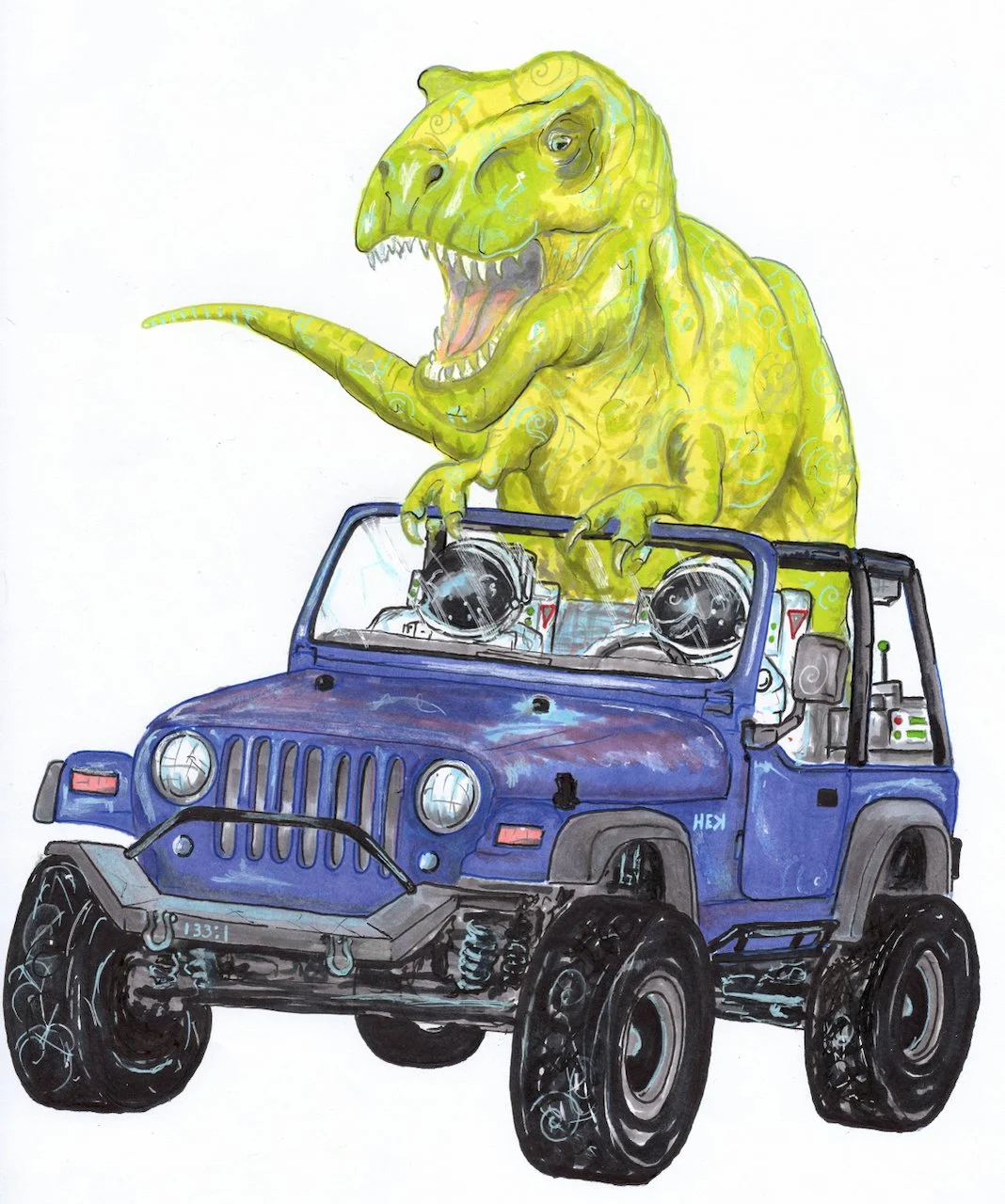
In a similar vein, I have sketched a T-Rex on the bumper, a heavy, intimidating burden that I carry wherever I go. Just like the elephant in the room, it is impossible to ignore, yet I often pretend it does not exist. How often do we carry such burdens, heavy and potentially dangerous, yet do everything we can to convince everyone that we have it all under control?
Today, I pause and reflect on the burdens I carry. I take note of the things I have tied to my bumper, and I acknowledge that I have hauled many of them around for far too long. As is my practice, I turn to Scripture and pray through the following verses, thanking God for His willingness to take on my burdens and carry me through another day.
Humble yourselves, therefore, under the mighty hand of God so that at the proper time He may exalt you,
casting all your anxieties on Him, because He cares for you.
1 Peter 5:6–7 (ESV)
“Come to Me, all who labor and are heavy laden, and I will give you rest.
Take My yoke upon you, and learn from Me, for I am gentle and lowly in heart, and you will find rest for your souls.
For My yoke is easy, and My burden is light.”
Matthew 11:28–30 (ESV)
In these verses, God invites us to lay down the T-Rex we have tied to our bumper. He invites us into His peace, a peace that surpasses all understanding. He invites us into rest so complete that we feel it in our very soul.
What are you made of?
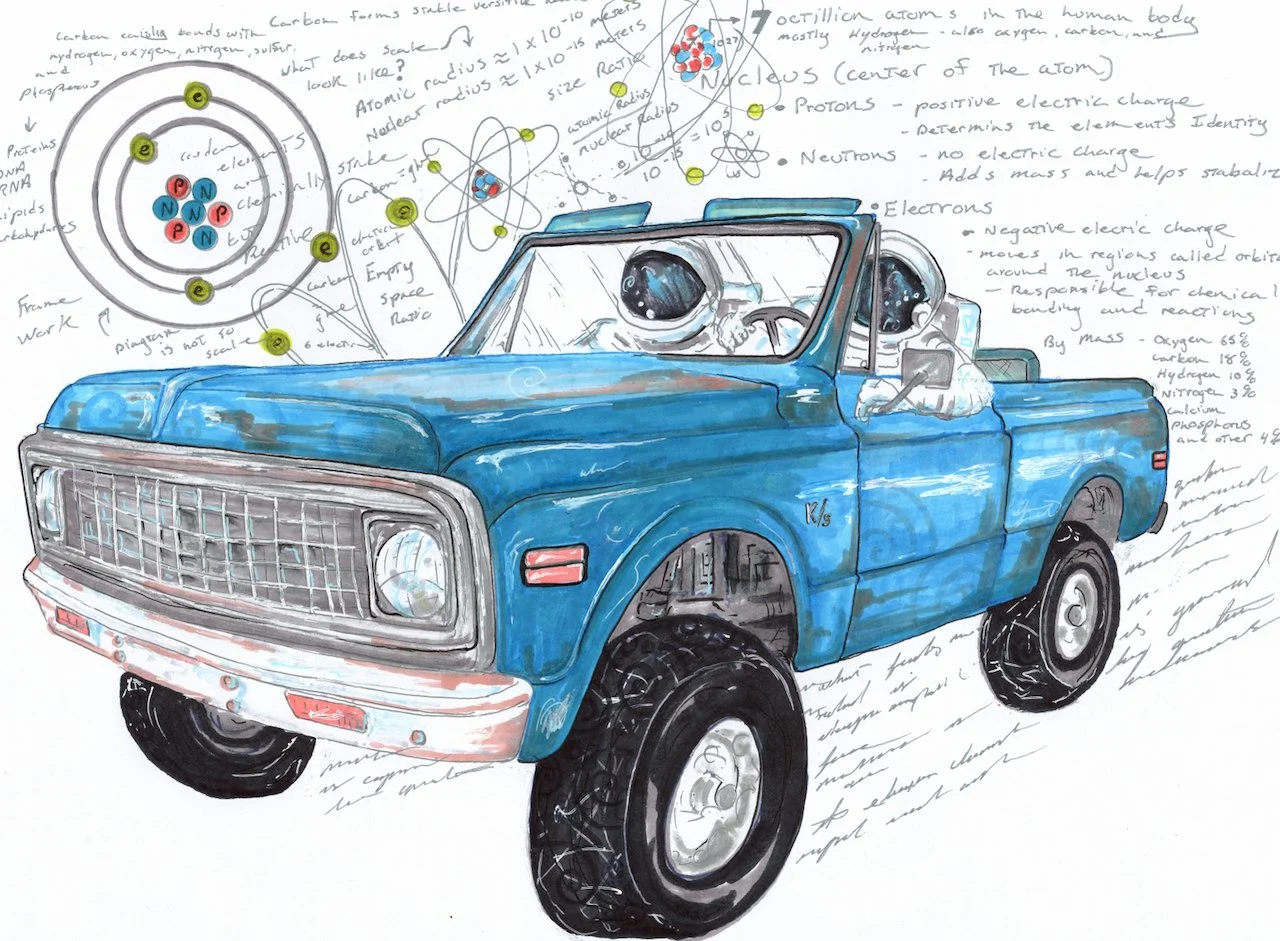
This week my imagination and Sharpie markers went down the atomic rabbit hole, asking a simple question: what are you made of? The human body is built from unimaginably small pieces, assembled with astonishing precision. The average human body contains roughly 7 octillion atoms. By mass, we are composed of about 65% oxygen, 18% carbon, 10% hydrogen, 3% nitrogen, with the remaining 4% made up of calcium, phosphorus, and other trace elements.
At the atomic level, we begin to see just how finely tuned our design truly is. Take carbon, the element that provides the backbone of biological life. With six protons, carbon has exactly four valence electrons, allowing it to form four stable covalent bonds. These bonds are strong enough to endure, yet flexible enough to rearrange into complex molecules. If carbon had three or five valence electrons, the chemistry required for life would not be possible. Atoms themselves exist in a delicate balance between collapse, where everything fuses or decays, and chaos, where nothing binds. Even the electromagnetic force must be precisely calibrated. If it were slightly stronger, electrons would bind too tightly and chemistry would fail. If it were slightly weaker, electrons would not remain bound at all.
Life is not an accident. The more I learn, the more I stand in awe of just how finely tuned creation truly is. One day I will meet my Maker, and I suspect that when that day comes, my awe and wonder will increase beyond measure.
“For by him all things were created, in heaven and on earth, visible and invisible, whether thrones or dominions or rulers or authorities. All things were created through him and for him. And he is before all things, and in him all things hold together.”
Colossians 1:16–17 (ESV)
What are you chasing
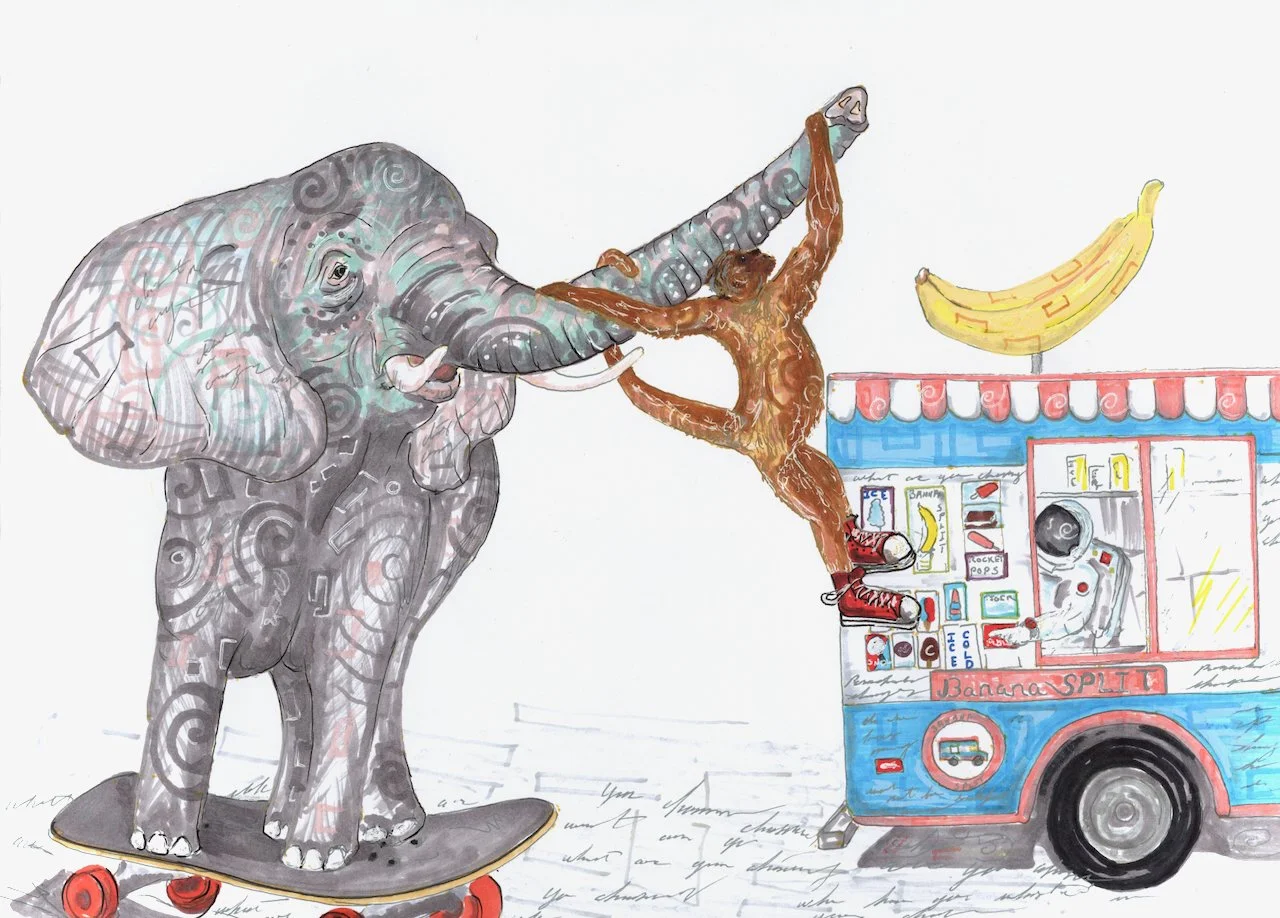
What are you chasing?
I found myself this week asking the question, What are you chasing? It emerged from a conversation with my wife and lingered in my heart. Our brains naturally measure experiences against whatever we value most. What receives our attention becomes the lens through which everything else is evaluated.
Over the years, I have chased many things, enlisted others in the pursuit, climbed and descended many ladders, and even caught a few, only to discover they did not satisfy.
Ecclesiastes 5:10 (ESV)
“He who loves money will not be satisfied with money, nor he who loves wealth with his income; this also is vanity.”
My prayer today is that my focus would center on the things that do not perish, the things that cannot be lost, and the things that cannot be bought, sold, or traded. I pray that I would train my eyes and focus on the things that are above.
Colossians 3:1–2 (ESV)
If then you have been raised with Christ, seek the things that are above, where Christ is, seated at the right hand of God.
Set your minds on things that are above, not on things that are on earth.
Listening to Learn
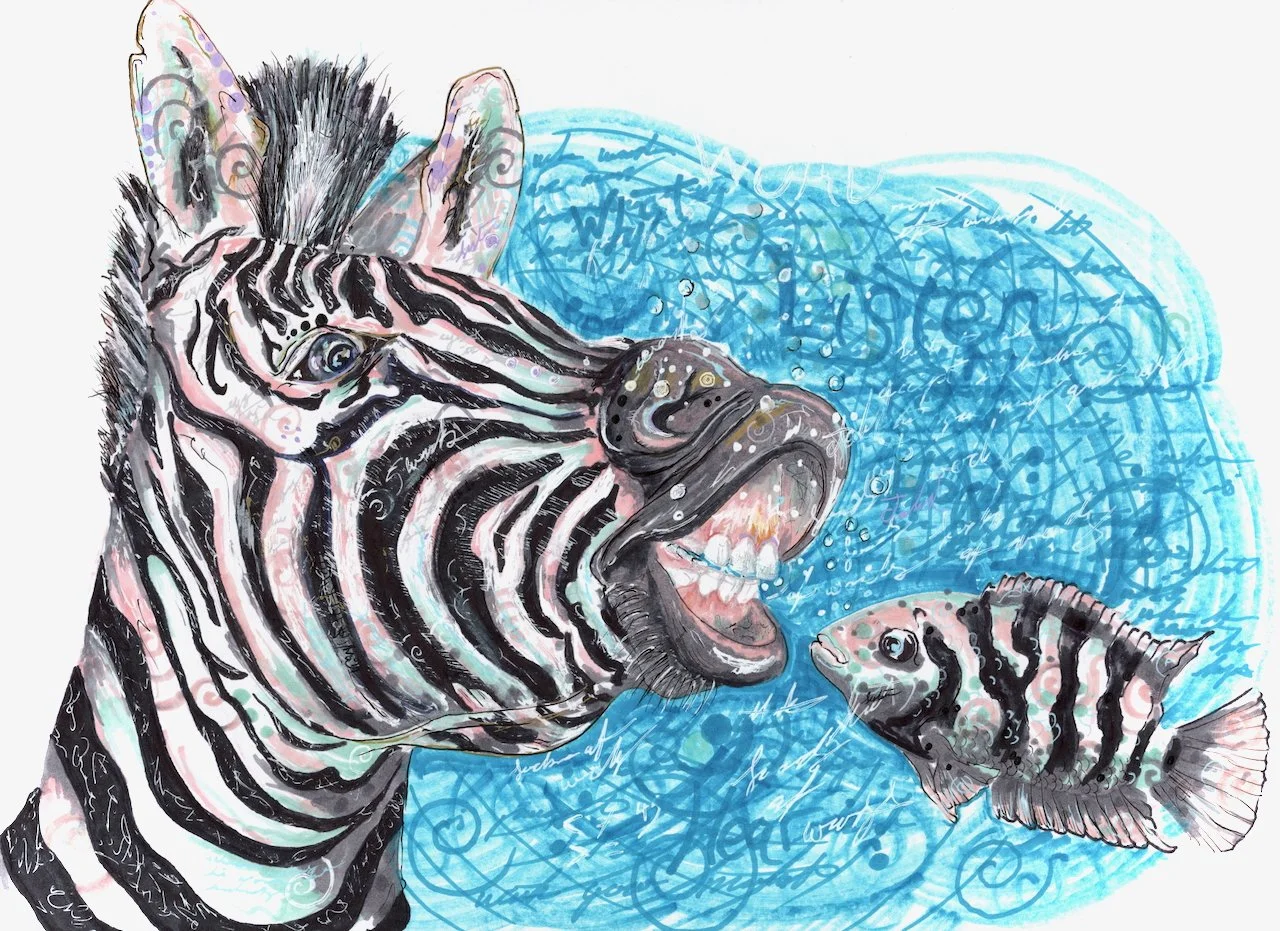
Listening to Learn:
I was reminded this week of the importance of listening while working through a few things with my family. Intentional listening is a muscle that requires regular exercise and, in my case, constant attention in order to be effective.
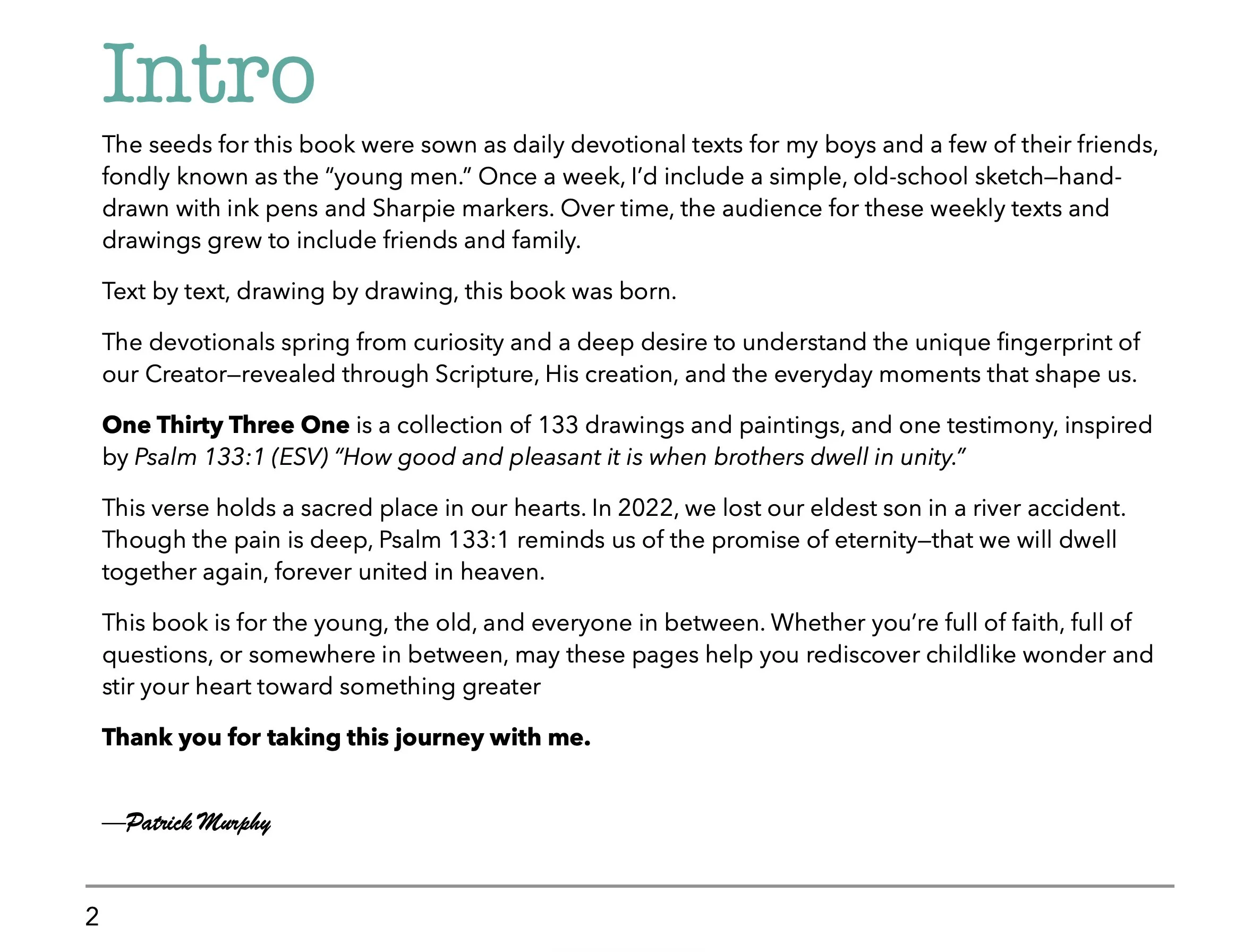
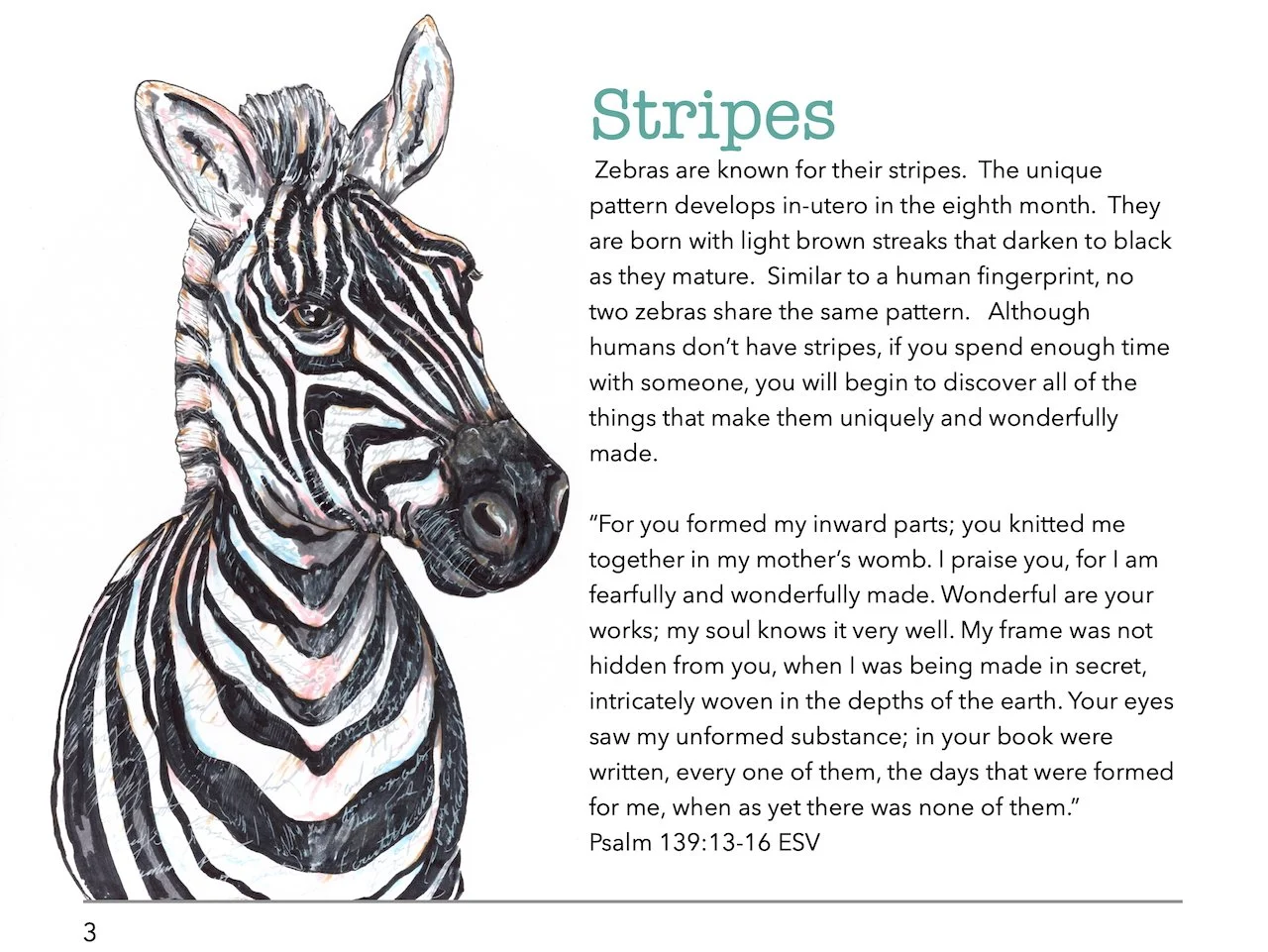
Let’s just say my usual knee-jerk reaction to trouble or conflict is to take on the role of a fixer—i.e., “Let me tell you how we’re going to solve this issue in five bullet points or less.” That typically works about as well as a zebra attempting to give directions to a fish!
This week, I intentionally paused, took time to pray, listened to God, and then listened to my family. I asked questions and found myself learning, understanding, and eventually reaching common ground. Who says you can’t teach an old zebra new tricks?
Listening—truly listening—creates space for understanding and healing. It reminds us that wisdom begins not with words, but with humility and patience.
James 1:19 (ESV) “Let every person be quick to hear, slow to speak, slow to anger.”
Proverbs 18:13 (ESV) “If one gives an answer before he hears, it is folly and shame.”s
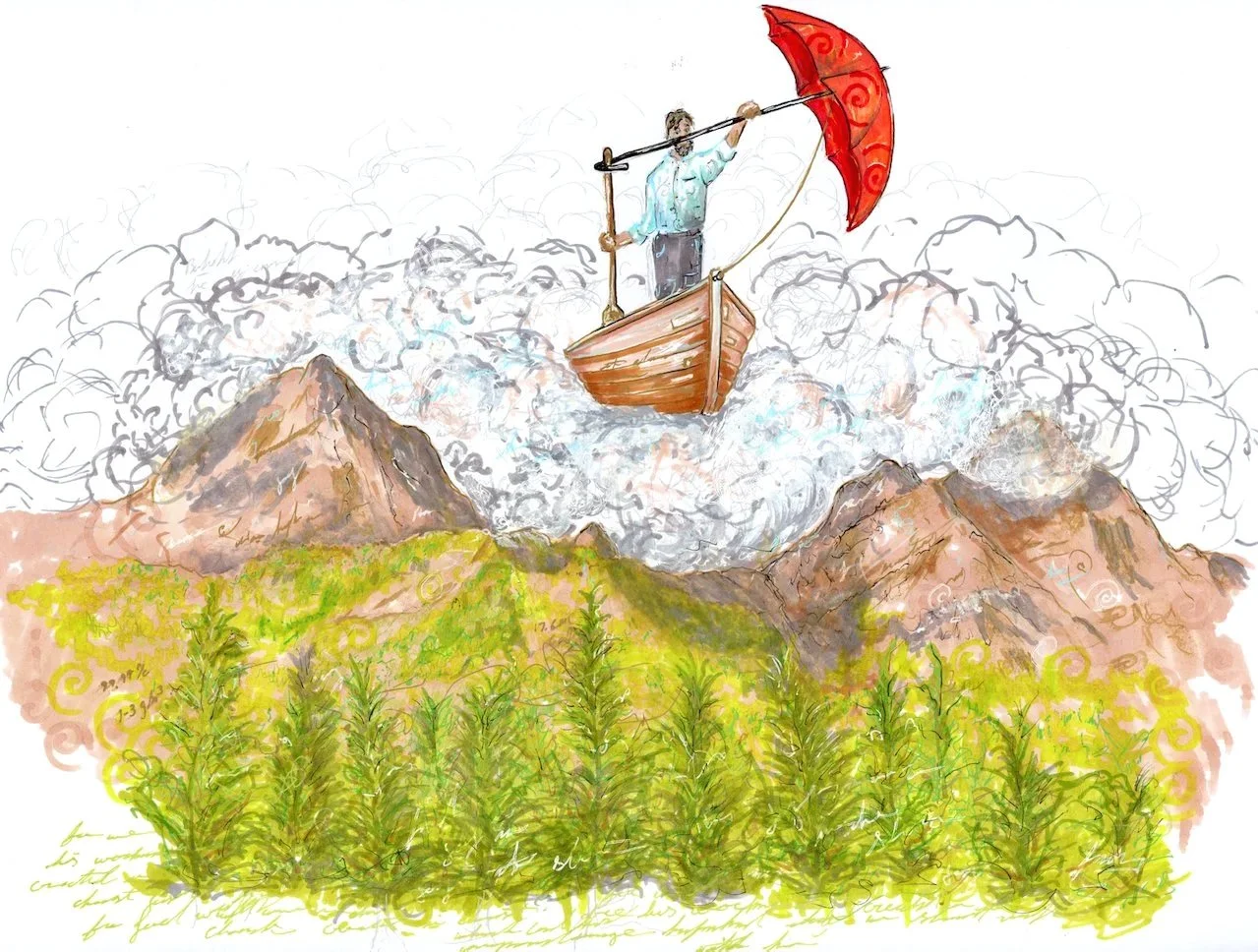
In every life a little rain must fall (B. G. De Sylva, 1921)
The Pacific Northwest has been under an atmospheric river alert for weeks. My imagination pictures clouds so heavy with water I could sail across them. Yet even the thickest clouds are still 99.9% air, quietly carrying what they will one day release.
Clouds gather water slowly and let it go only when droplets grow too heavy to remain suspended. Atmospheric rivers can drop inches of rain. One inch equals 17.4 million gallons per square mile. Trillions of gallons have fallen one small drop at a time, covering the PNW in a steady, patient release.
Rain requires waiting. It does not fall where or how we would choose.
Ecclesiastes 11:3 (ESV)
“If the clouds are full of rain, they empty themselves on the earth,
and if a tree falls to the south or to the north,
in the place where the tree falls, there it will lie.”
Waiting on God’s timing invites us to trust not only when something happens, but how it happens. We may pray for breakthrough in one place, yet it arrives in another. Faith rests in the belief that God’s timing and ways are better than our own.
In life, a little rain, and a little discomfort, will fall. Yet it is the rain that draws flowers from the ground, and it is often the struggle that stretches us and allows us to grow.
Tale of Two Pumps

If you have spent much time in an old truck, you have probably had a run-in with a failing fuel pump. It does not matter how strong the engine is; you are not going anywhere without a working pump. Most old-truck pumps last around 100,000 miles. At ten miles per gallon, that is about 10,000 gallons of fuel pushed through before it finally gives out.
That simple thought sent me down a math trail about my own internal fuel pump. With an active childhood and decades of running, swimming, and biking, my heart has pumped and circulated about 2,100 gallons of blood every single day. Over 52 years that adds up to roughly 40 million gallons, enough to fill 111 Olympic-sized swimming pools.
When I sit with that, I am reminded how easy it is to overlook the quiet miracles God built into our bodies. The heart is one of His masterpieces, faithfully pulsing moment after moment, beating 24 hours a day, seven days a week.
Today I pause with my hand on my chest, feeling that steady rhythm. And I thank God for His unmatched craftsmanship, for this hidden gem of a pump that keeps my lifeblood flowing.
Deuteronomy 29:29 (ESV)
“The secret things belong to the Lord our God, but the things that are revealed belong to us and to our children forever, that we may do all the words of this law.”